
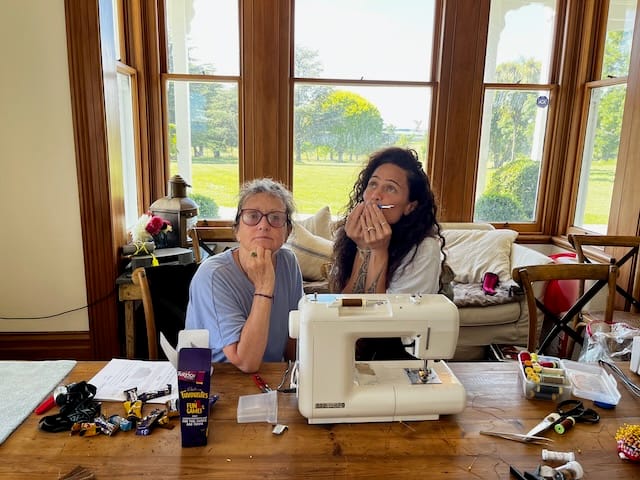
It’s incredible, the stamina that my Mum has for sewing. Not just physically, but mentally. My learning curve with fabric and thread was steep and punishing. Night after night last summer we sat side by side, urged along by the high energy of the Tangaroa moons, one of us wearing a headtorch while wielding an unpicker, the other watching on in mute acceptance. Mistakes can be companionate. Failure doesn’t need to be lonely.
There are things I wish I had known about sewing before I started but at the same time it’s just as well I didn’t. Ignorance is bliss. For example, it’s called sewing but it could just as easily be called “ironing”. Sewing straight lines can not be left to the eyes of a novice. Ignore the instruction “measure and press” at your peril. In other words, a lot of sewing involves no sewing. And I fucking hate ironing.
We are terrible together in some ways, my Mum and me. I am an enthusiastic starter with an appetite and confidence that far surpasses my abilities, which is a generous way of saying a fool. My mother on the other hand underestimates the advanced and intrinsic nature of her skills and experience. She thinks things like invisible zips and plackets and overlocking at whiplash-speed is “easy” and “common sense.”
Then she sees me bunny-hopping down a basting stitch and can only stare in disbelief.
“Step on it!” she will occasionally bark.
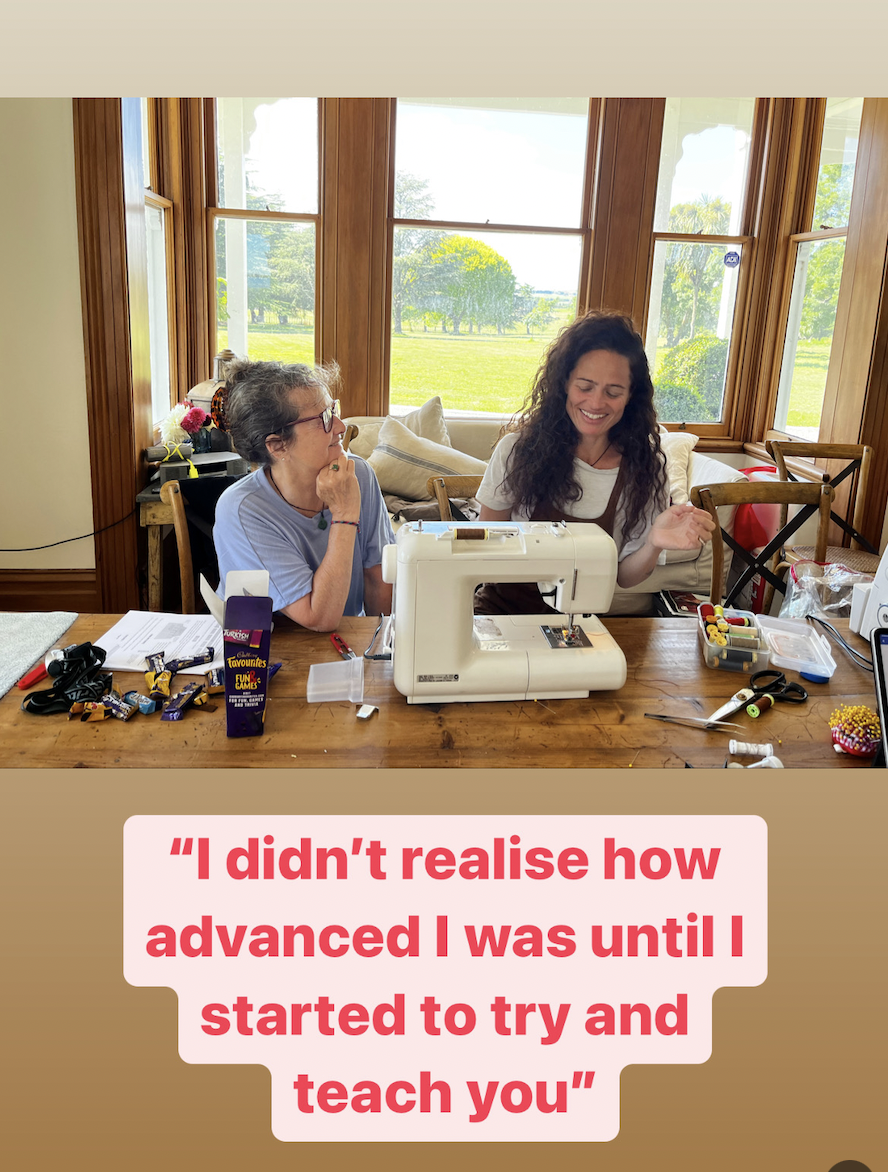
At the same time, she hates things to be done poorly. She will fiddle maddeningly with hems to hide overlocked edges even though, as I pointed out once, nobody can see the inside of the garment.
Her response was predictable, delivered with flaring nostrils: “But you will see it.”
This is about follow through. The kind of commitment that sometimes feels like a law unto itself, a law that could become self-sabotaging if left unchecked. Personally I feel quite comfortable accepting effort over excellence, proud to step out in a skirt with mismatched pockets because I made it! Me! I made it! Look! Look!
Darren was much more like Mum. He hated anything budget-looking. Everything he made needed to look like it was handled by a professional or came straight from a shop. By trade he was a plumber and gas fitter, but he’d hate me telling you that - I’m just realising this now - because he was proud. Who wouldn’t feel indignant about being looked down upon by people who call you to deal with their shit? By nature he was an inventor. A mad one. He loved physics. He wanted to know how and why shit worked. For Christmas one year he made his kids an infinity mirror. Everyone who knew him can recall something impressively weird and fantastic he invented, like a working taser housed within an old iPhone3, you wouldn’t want to answer that phone when it rang, trust me.
Mum didn’t teach him to sew, she didn’t need to because he taught himself. No pattern necessary, no iron. When you have an engineers’ brain, function and form are a matter of logic rather than fashion. Joining fabric is all about angles, maths and the behaviour of different materials in response to applied force.
I said to Mum “I guess at a certain point with Darren you had to make a decision to stop worrying about him, because worrying wasn’t going to keep him safe.”
She didn’t look up, but the sound of the unpicker ripping seams was soothing so the question did not feel out of context. A lot of things can be learned while you’re sewing.
Apparently, my Grandad, who I never met, used to say that if you’re not going to do it right, don’t bother. Mum admitted that her worst sewing mistake, and the one she made most often, was forgetting to sweep a hand under the fabric before placing her foot to the pedal, inadvertently catching a panel on the right side of the fabric which she’d then have to sit and unpick under a torrent of her own frothing profanity.
“Pamela! You st*#@! b#^$@” I’ll hear her shout on occasion.
No-one is harsher on us than ourselves.
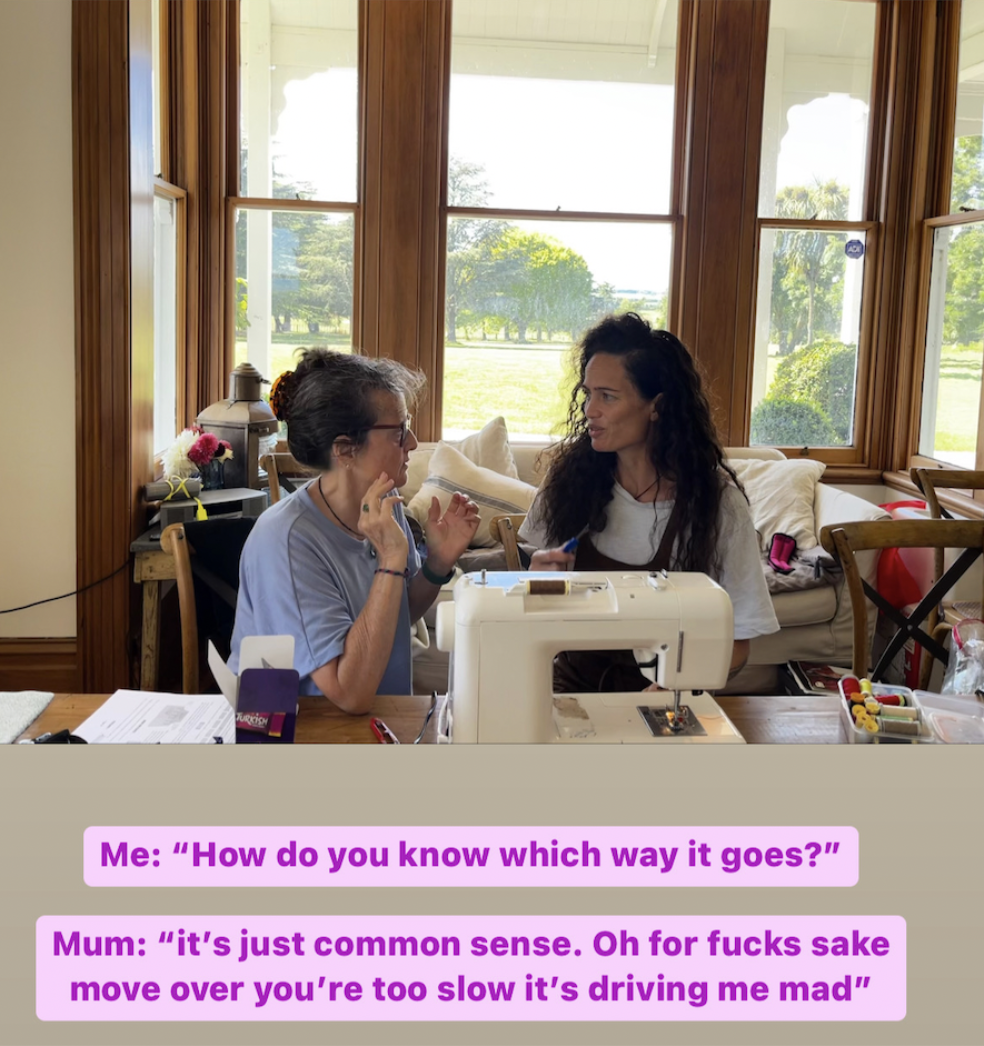
Her whole life, she said with wonderment as she looked over my shoulder and watched me bungle another curve, she’d been afraid to make mistakes. She said that teaching me had helped her realise that in childhood she’d missed out on something essential: encouragement. What might she have done in her life, if she’d had it? Her father’s exacting standards had caused her to fear the word “try,” associating it with failure. And yet here I was demonstrating that talent was largely irrelevant next to trying!
At the end of the summer I went back to work and Mum returned to the U.S. Before she left she ordered me a new unpicker. It turned up in the mail glinting with promise and she handed it to me like she was handing me the keys to the universe; keys that she wished someone had handed her.
“You blunted the other one from overuse,” she said.
Some days, when I’m sitting at the machine, I catch myself looking at its lovely ergonomic handle, the sharp tip of its blade, its compact weight; not a symbol of failure, but a tool of second chances. It almost makes me want to make a mistake, just so I can sit under a Tangaroa moon ripping seams by head-torch, immersed in the satisfaction of having bothered to try.
Keen to learn to sew? A few tips from an enthusiastic beginner:
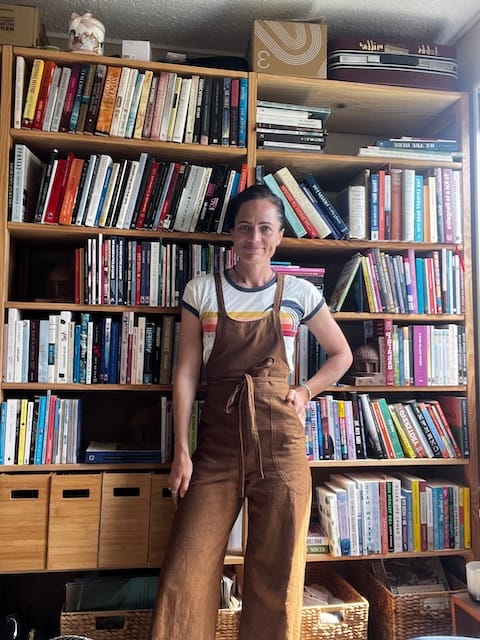
The best thing I ever did when I decided to learn to sew was also probably the most inadvisable thing to do: I sunk a decent wad of cash on nice fabric and chose a pattern for a pair of overalls I knew I would wear a lot - in other words, I chose an advanced pattern. Taking this route is risky and expensive. It basically means that if the thing doesn’t turn out, you’ve not only wasted your time and money, but you risk snuffing out your motivation at the precise moment it’s vital to feed it. I think it’s worthwhile pointing out what maybe everyone else but me already knows: sewing is harder than it looks (I would add, long, mildly infuriating, and at times, quite boring).
On the other hand, making an up-front investment, coupled with the desire to wear the thing you really like, makes it much harder to give up. If you can stick it out, even if the thing is a “C minus” like my first pair of overalls according to Mum, once you’ve made one, you suddenly know how to make lots.
Which bring me to my next tip, which is also potentially inadvisable: Plan to make not one, but four.
I did not do this willingly, my Mum forced me to. She said I needed to make a second pair of overalls to solidify the skills I’d learned. But when I went to lay out the pattern, she slipped another layer of fabric underneath and made me cut out TWO sets of everything.
We argued intensely about this. I insisted I did NOT need three pairs of overalls. She insisted it was an uneconomic use of time to cut out only one set at a time. As a factory outwork machinist her whole life, Mum was used to making 100s of pairs of a thing - which is precisely where her expertise comes from.
By the time I finished the third pair of overalls, I finally understood how to make them. I did not need to make a fourth pair, but I wanted to because I wanted that A+, goddamit.
Now, I routinely set out to make multiple versions of the same thing; which means I now have basically sewn myself a uniform [see photos and links to patterns below].
I know what you’re thinking: sounds expensive. It is. It really is. Not just the fabric but cotton and patterns and everything, and that’s assuming you have access to a sewing machine (I inherited Mums).
What I do, is fossick through the bargain bins at fabric stores or second hand shops (sometimes just $5 or so). I use these to make the first version of something, mostly because I haven’t yet learned the whole other science of measuring things to actually fit me. The horror of making something that doesn’t fit!
I now only make something out of special fabric once I know I love it and can make it well. There are heaps of free patterns, but I’ve bought a few too - it’s good to support designers, the same way lots of people support me to write this newsletter.
The highest cost is still borne by Papatūānuku. The fashion industry is responsible for more carbon emissions than air travel and that’s before we even look at the impact of textile pollution on waterways. Sewing our own clothes doesn’t solve these issues (we don’t manufacture fabric here in Aotearoa) but the one thing it does do is give you reverence for every scrap of cloth you see around you. So what has changed, for me personally, is that I just don’t want to buy clothes anymore. I feel like I’ve somehow manage to unhook myself from a bad habit just by changing the way I value things, not just in economic and environmental terms, but in terms of time. I not interested in “fashion” but I am interested in construction. Because now, the goal is to make things to last, not to discard.
Ideally, we’d all be repurposing the fabrics that already exist in the world, like the incredible Mistyratima_thepeople on Instagram, but I first need to develop a base level of skills because it’s a lot harder than it looks #physics.
There are, however, ZERO-WASTE patterns on the rise, and I’m hoping to try one out soon.
And so much more….. (but that’s enough for now).
Thanks for reading! If you liked this, you might enjoy this lovely decade-old article called How Sewing is Like Quantum Physics.
An orthodox sewer looks upon people like me with disdain, but then, thanks to Physics, has a change of heart, here’s a little snippet - but the whole thing is fascinating and it feels like we’re in dialogue:
“Observe: anyone and everyone was teaching everyone else to sew. Anyone and everyone could write a sewing book, make a pattern, sell handmade clothes. No one needed to be formally schooled in the fine art of vintage dressmaking to share what they knew.…. the idea that anyone, of any skill level, could be an expert in anything if they believed strongly enough in themselves, was absolutely terrifying. "Mum," I would whisper-shout on the phone, traumatized, "they sew clothes that don't really fit. And they're okay with it! I can't find anyone here who can help me learn to draft. I'm going to die!"
Anyway, that’s it for me! I’m off to self-draft my first pattern! Wohoo!
Live dangerously, and remember, try everything - at least four times.
Nadine
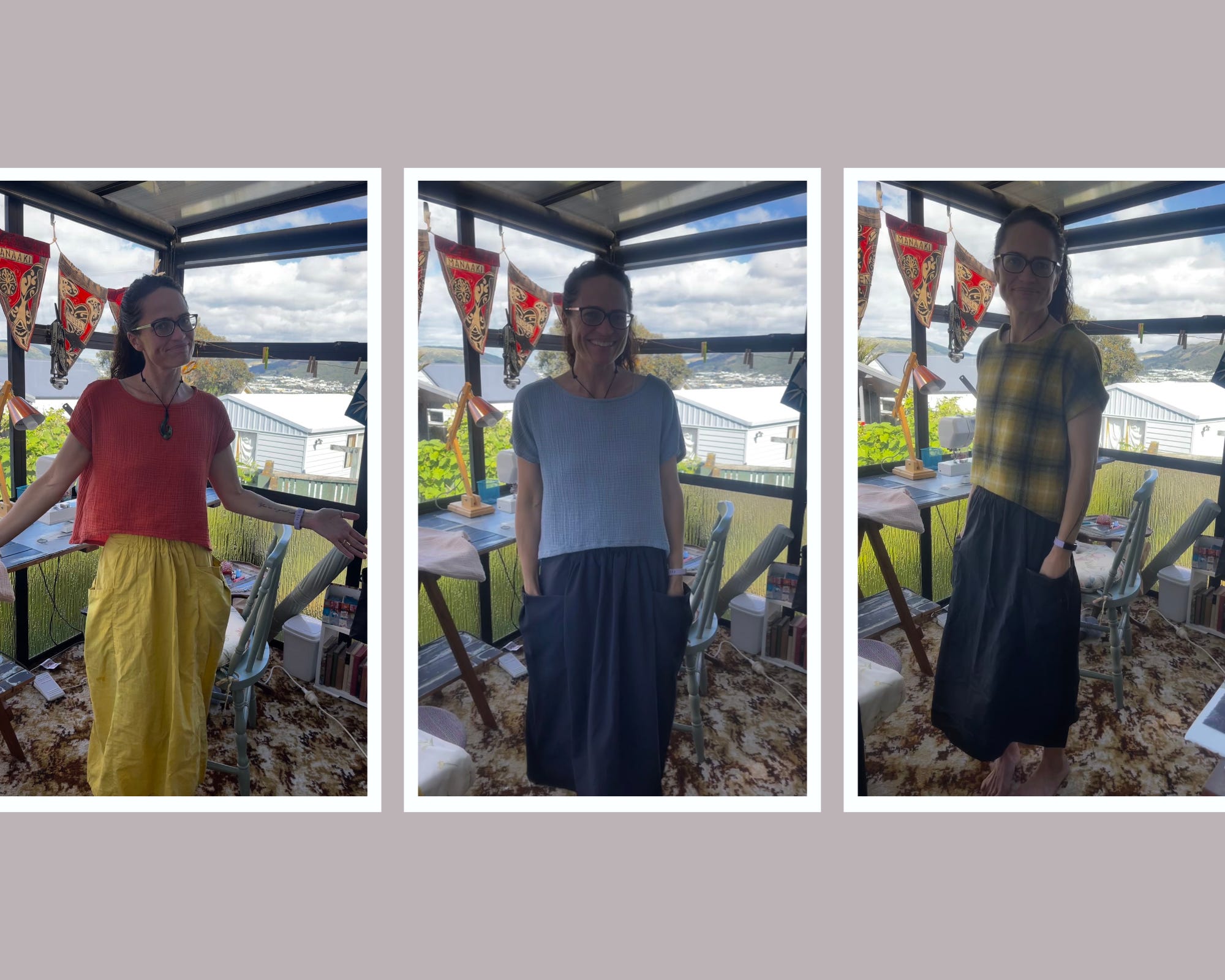
Find the free Peppermint Pocket skirt pattern here.
Strata top, which is (according to Mum) “ridiculously easy you don’t need a pattern for that” shown here in a step by step sew along video. The pattern needs to be purchased here.
Thank you for reading Iti Te Kupu: Small words in a vast universe. This post is public so feel free to share it.


